

Quick Start
Upload a series of keyframe images representing different moments in your desired video. Zoice’s AI analyzes the differences between frames and generates smooth interpolated frames to create fluid motion.1
Navigate to New Video
Go to the Video Generator tool in your Zoice dashboard by clicking on New Video.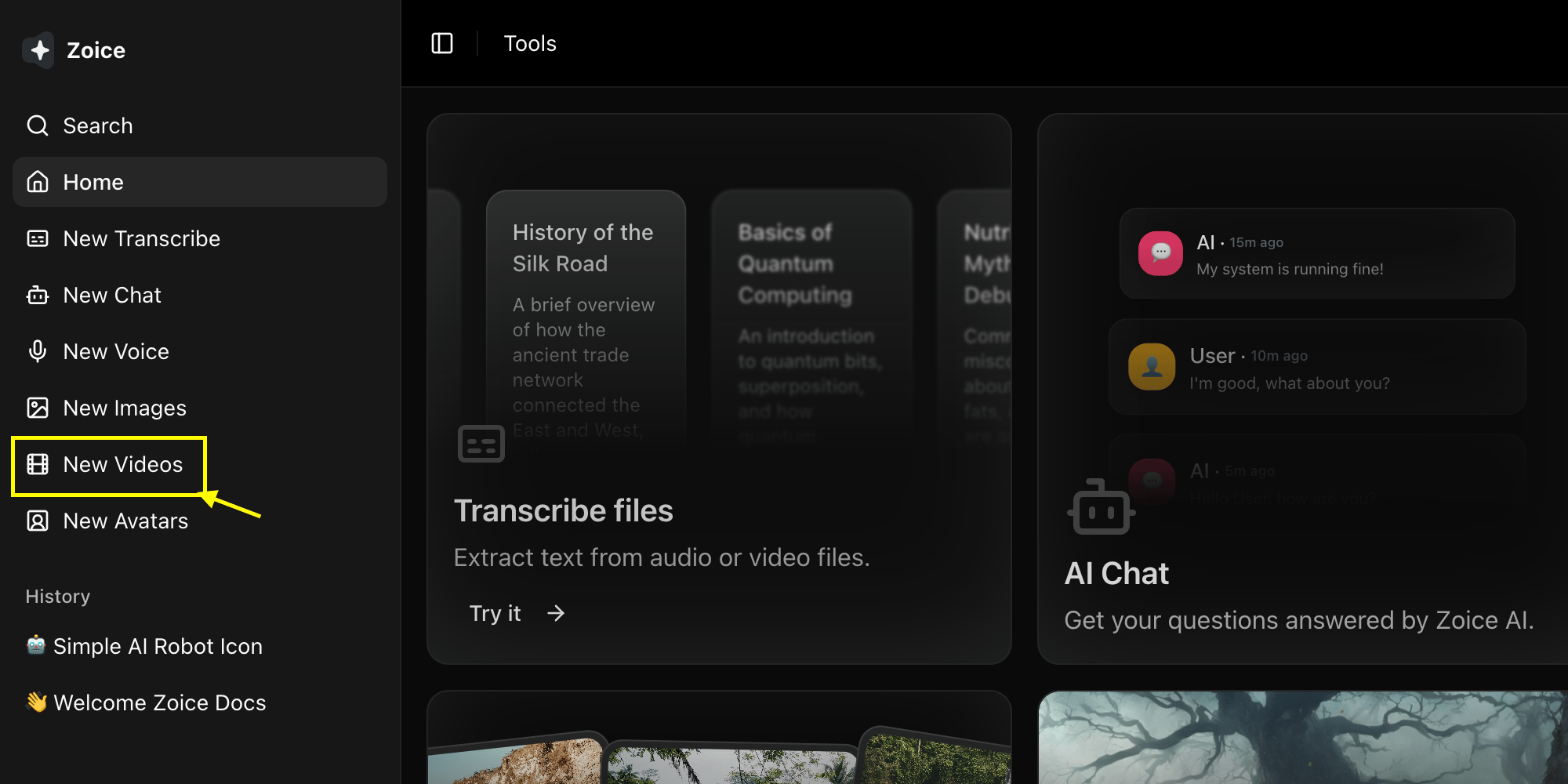
2
Select Model
Choose a Video model like Veo 3.0 or Veo 3.1 based on your project needs.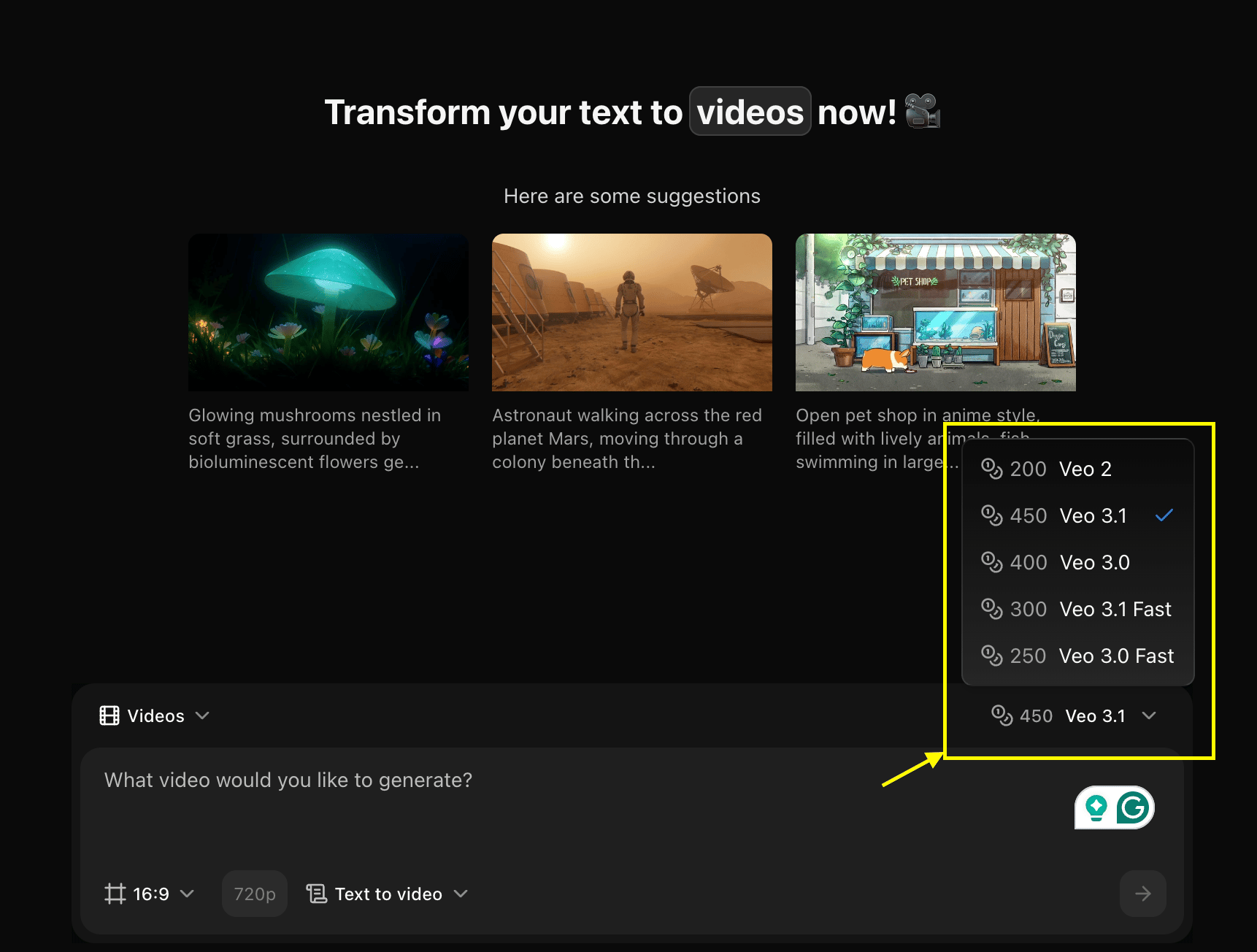
3
Configure Settings and Select Frame to Video Mode
Set dimensions, resolution, and choose Frame to Video mode.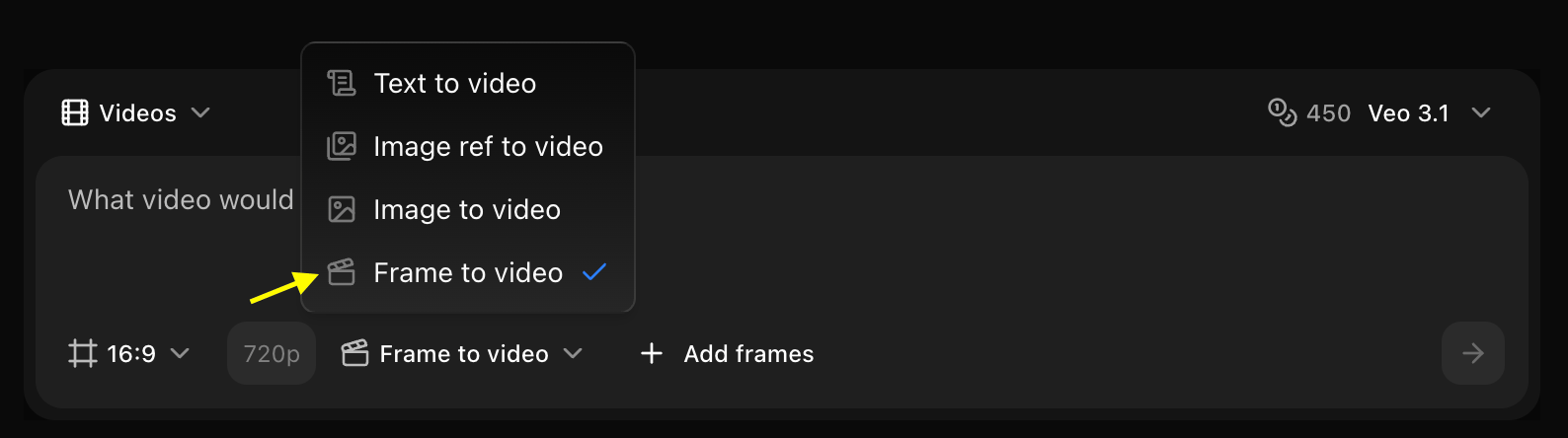
4
Add Frame
Click on the Add Frame option to upload your keyframe images in the exact sequence you want them to appear.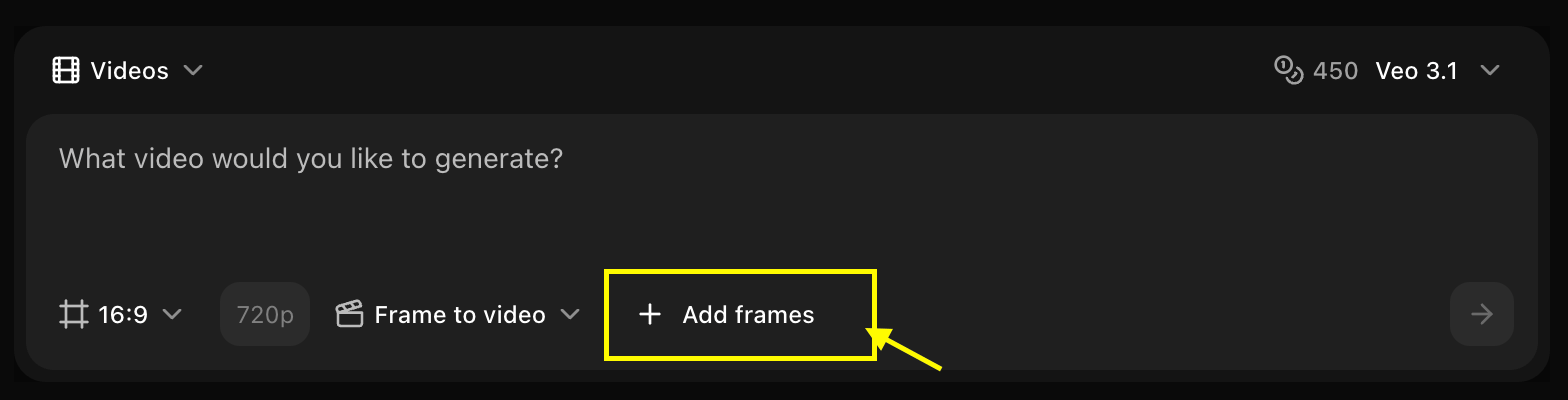
5
Write Your Text Prompt
Enter a detailed description of the motion, interpolation, or style you want the AI to apply between your frames.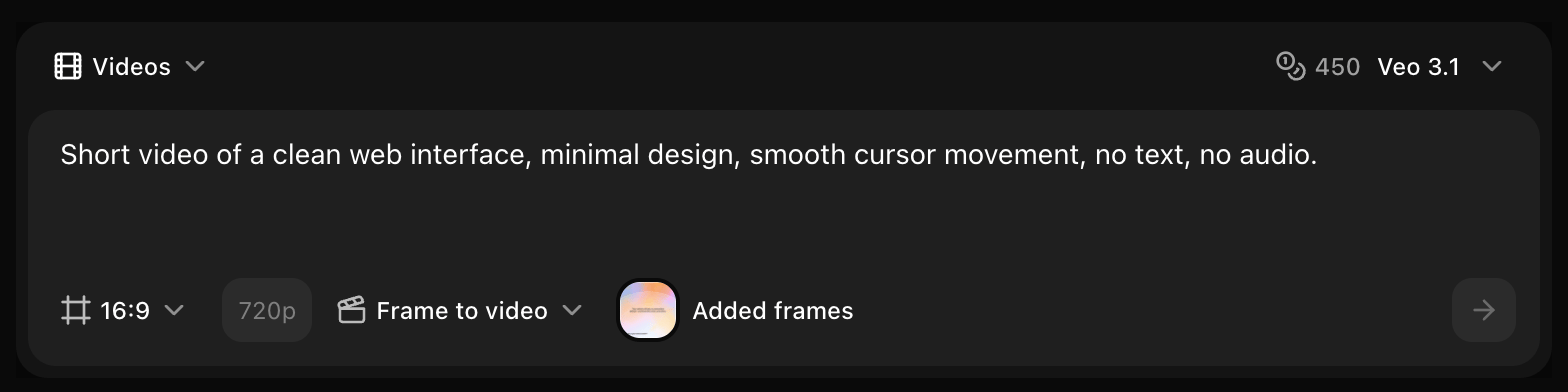
6
Click on Generate
Click on the Generate button to begin creating your video.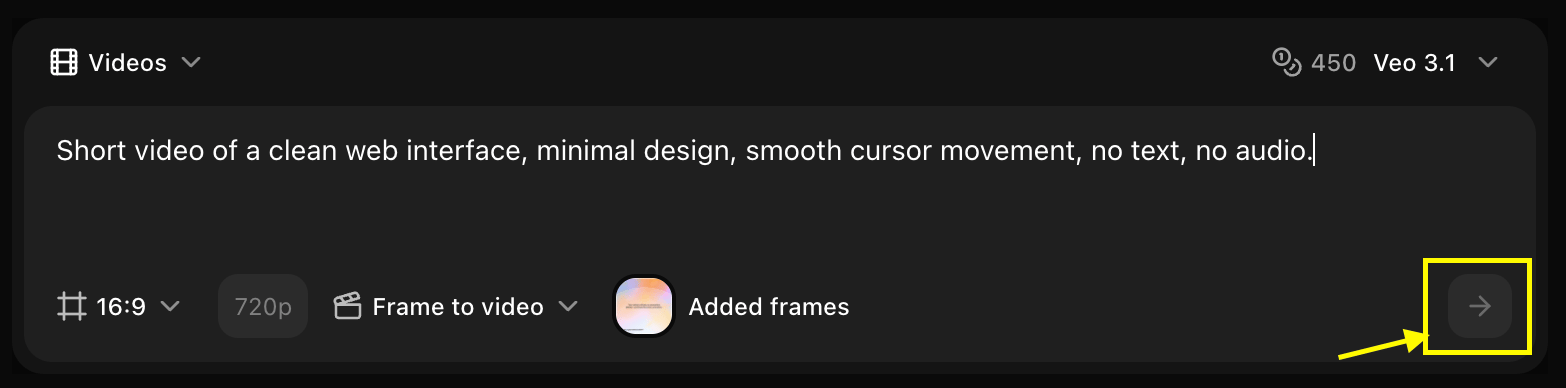
7
Download
Save your generated video.
Keyframe Requirements
Technical Specifications
- Number of Frames: 2-20 keyframes
- Formats: JPG, PNG, WebP
- Max Size: 10MB per frame
- Resolution: Consistent across all frames (1920x1080 recommended)
- Aspect Ratio: Must be identical for all frames
Content Guidelines
- Clear progression between frames
- Consistent lighting across frames
- Similar composition and framing
- Logical motion sequence
- High quality, sharp images
Frame Rate Options
- 24 FPS
- 30 FPS
- 60 FPS
Cinematic Standard
- Film-like motion blur
- Cinematic feel
- Smaller file size
- Best for: Artistic projects, film-style content
Interpolation Settings
Interpolation Strength
- Low (2-4 frames)
- Medium (5-10 frames)
- High (11-20 frames)
Minimal Interpolation
- 2-4 frames between keyframes
- More visible steps
- Faster processing
- Best for: Stop-motion style, stylized animation
Motion Blur
- None: Sharp frames, no blur
- Light: Subtle motion blur
- Medium: Natural motion blur
- Heavy: Dramatic motion blur effect
Use Cases
Stop-Motion Animation
Create smooth stop-motion videosProduct Animation
Smooth product rotation or transformationCharacter Animation
Create character movement sequencesTime-Lapse Smoothing
Smooth out time-lapse sequencesBest Practices
Keyframe Planning
Keyframe Planning
- Plan your sequence before shooting
- Maintain consistent camera position
- Use tripod for stability
- Mark positions for repeatability
- Shoot more keyframes than needed
Lighting Consistency
Lighting Consistency
- Use consistent lighting across all frames
- Avoid auto-exposure changes
- Manual camera settings recommended
- Same white balance for all frames
Motion Planning
Motion Planning
- Keep movements simple between frames
- Avoid large jumps in position
- Smooth, gradual changes work best
- Test with fewer frames first
Quality Control
Quality Control
- Use high-resolution images
- Ensure sharp focus on all frames
- Check for consistent framing
- Preview before final generation
Advanced Techniques
Easing Control
Control acceleration and deceleration:- Linear: Constant speed throughout
- Ease In: Start slow, speed up
- Ease Out: Start fast, slow down
- Ease In-Out: Slow start and end, fast middle
Variable Interpolation
Different interpolation between different keyframe pairs:- Upload all keyframes
- Set custom interpolation for each transition
- More frames for complex movements
- Fewer frames for simple transitions
Hybrid Animation
Combine with other techniques:- Start with keyframes
- Generate interpolated video
- Use as reference for further AI generation
- Add effects or modifications
Common Scenarios
Animation
Create smooth animations from drawings
Product Demos
Showcase products with controlled motion
Time-Lapse
Smooth time-lapse sequences
Tutorials
Step-by-step visual guides
Workflow Examples
Stop-Motion Workflow
- Set up scene and camera
- Take photo of starting position
- Move subject slightly
- Take next photo
- Repeat 10-15 times
- Upload frames to Zoice
- Set low interpolation
- Generate smooth video
Product Rotation Workflow
- Place product on turntable
- Take photo every 45 degrees (8 total)
- Ensure consistent lighting
- Upload frames in order
- Set high interpolation
- Add light motion blur
- Generate smooth rotation
Character Animation Workflow
- Draw or pose character in key positions
- Capture 8-12 keyframes
- Ensure consistent scale and position
- Upload sequence
- Set medium interpolation
- Add natural motion blur
- Generate fluid animation
Troubleshooting
Choppy motion
Choppy motion
- Increase interpolation frames
- Check keyframe consistency
- Ensure smooth progression
- Add motion blur
Ghosting or artifacts
Ghosting or artifacts
- Reduce interpolation strength
- Ensure consistent lighting
- Check for camera movement
- Use higher quality keyframes
Unnatural movement
Unnatural movement
- Adjust easing settings
- Reduce large jumps between frames
- Add more keyframes
- Lower interpolation count
Inconsistent quality
Inconsistent quality
- Use same camera settings for all frames
- Maintain consistent resolution
- Check focus on all frames
- Ensure proper exposure
Technical Specifications
Supported Workflows
- Stop-Motion: 2-20 keyframes, low interpolation
- Animation: 5-15 keyframes, medium interpolation
- Product: 4-12 keyframes, high interpolation
- Time-Lapse: 10-20 keyframes, medium interpolation
Output Options
- Resolution: Match input or upscale to 4K
- Format: MP4 (H.264 or H.265)
- Frame Rate: 24, 30, or 60 fps
- Quality: Lossless or high-quality compressed
Next Steps
Images to Video
Create videos with transitions
Text to Video
Generate videos from prompts
Video Models
Explore AI video models